
The Coach House: Two Centuries of History to a Future of Radical Possibility
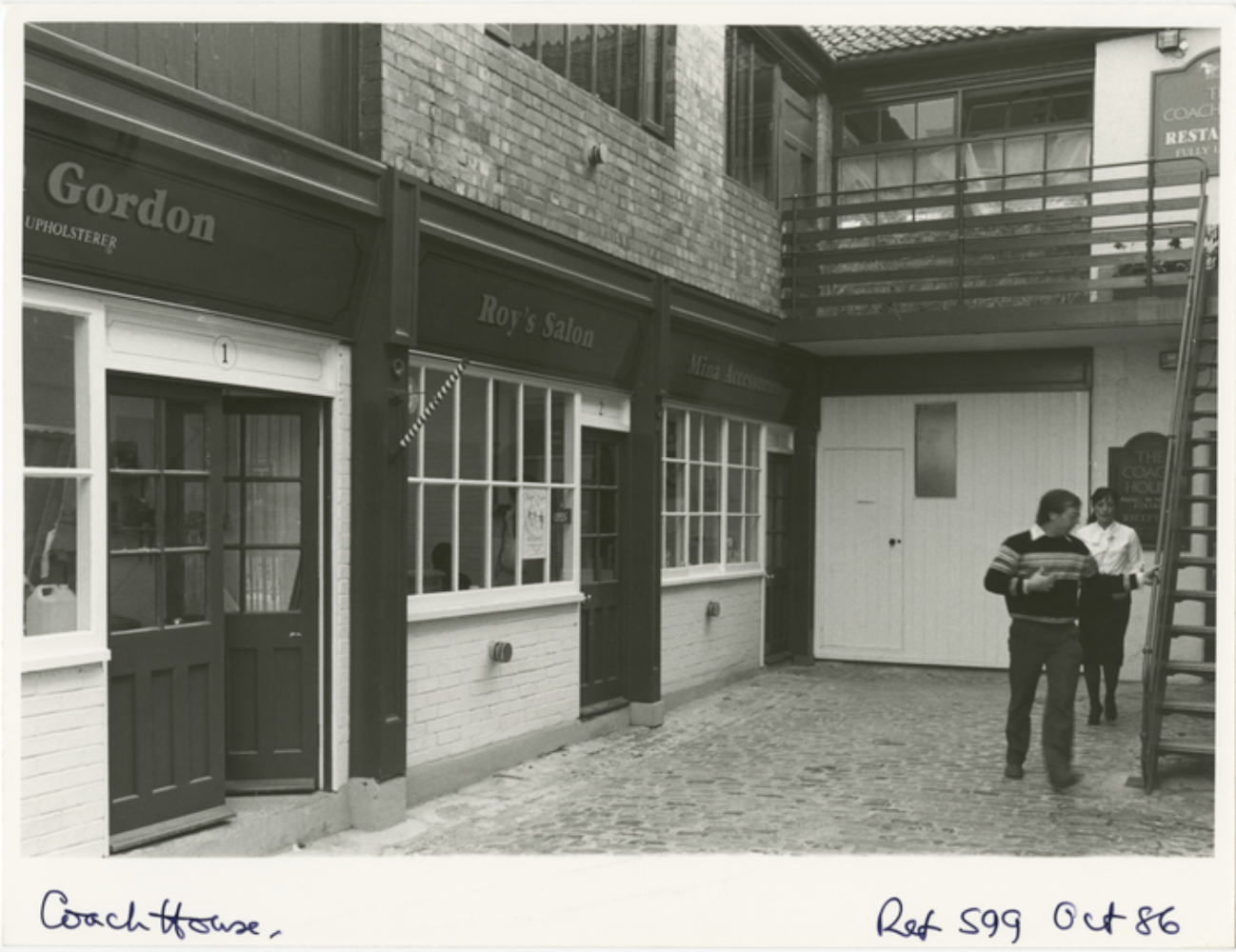
Photograph taken by John Trelawny Ross during the course of his work as conservation officer for Bristol City Council, within the Urban Design and Planning Department. Bristol Archives Ref: 45212/Of/35/41
The Coach House has stood at 2 Upper York Street, in the heart of St. Paul’s, for roughly two hundred years, quietly witnessing decades of Black, Bristolian, and global history. The building’s long lifespan connects it directly to major historical events, from the passage of the 1833 Slavery Abolition Act to the 1850s arrival of Henry Parker, a Black American man who escaped enslavement in Florida and ended up living in St. Paul's. It survived the devastating German air raids of the Bristol Blitz between 1940 and 1941, and it stood not far from the 1944 Park Street Riot, where Black American GIs clashed with US military police attempting to enforce racial segregation. As the neighbourhood evolved, the Coach House became a backdrop for the arrival and settlement of the Windrush Generation between 1948 and 1971, the historic 1963 Bristol Bus Boycott, and the 1980 St. Paul’s uprisings, where community members protested police violence, systemic racial discrimination, and economic deprivation. Most recently, the Couch House bore witness to the 2020 Black Lives Matter protests, which culminated in the toppling of a statue of seventeenth century slave trader Edward Colston into Bristol Harbour.
The walls of the Coach House hold traces of Bristol’s ever-changing social, economic, and cultural life, from nineteenth century transport infrastructure to post-war community organising and local enterprise. Today, as the Black South West Network (BSWN) opens the reimagined Couch House and launches the UnMuseum, the building enters a pivotal new era rooted in memory, heritage, and radical possibility. The story of the Coach House far transcends that of a simple building; it carries the legacy of a collective community space. Its history forces us to ask: who has historically had access to this space, who is remembered within it, and how can this place be protected and preserved for the future? In a city deeply defined by its associations with Black history, Black enterprise and cultural production are far too often marginalised or overlooked. Today, the Coach House offers a vital opportunity to engage with crucial aspects of history while building anew.
Cottages and Carriages (1828-1892)
The earliest phases of the site at 2 Upper York Street date from the early nineteenth century. The original building, known as the Cottage, has stood on the street since at least 1828. By 1838, the premises comprised of a dwelling house, divided into two properties for two tenants, with a workshop and carpenter’s yard. Further construction and additions were built over time as the structure adapted to the changing needs of an urban landscape. Similar to many other buildings in Bristol, its purpose shifted as the city expanded and industrialised around new patterns of migration, labour, and community. By 1842, the site was associated with Edward Folwell, marking the beginning of the building’s legacy as a coach house. Folwell advertised the location as “the cheapest establishment in the city for the hire of hearses and mourning carriages.” As his success grew, Folwell expended his business in 1853, applying to operate horse-drawn omnibus services across Bristol while also buying and selling horses. His prominent local standing and financial independence were cemented by 1858 when he ran for the St Paul’s ward council election and confidently declined a political committee’s offer to fund his campaign expenses.
By the late nineteenth century, the site evolved into a multi-use commercial and residential space under Folwell’s continued ownership. In 1873, a “professional tuner of the pianoforte" worked from the location. In 1875, parts of the building were offered for rent, including an unfurnished drawing room and bedroom alongside a refreshment and eating house. This shift continued into the next decade, with evidence showing a woman living at the address by 1886. Ultimately, Folwell leased the entire site to the Bristol Tramways and Carriage Company in 1892 for just £100 a year. At a time when horses and carriages shaped daily life, the Coach House served as an essential part of the infrastructure that kept Bristol moving.
Post-War Industry and Community Organising
However, the history of the Coach House cannot only be understood through historical leases and newspaper articles; it must be felt through the people who have worked, gathered, organised, and built community within its walls.
In the decades following World War II, the Coach House took on new uses, housing local governance and industry as Bristol continued to transform. At one point, it was said to have operated as a small factory, providing crucial employment for “Commonwealth Immigrants” arriving in St. Pauls. In 1951, the Town Clerk advertised it as the base for the city’s Central Purchasing Department. Later, in 1984, the property was marketed on a five-year lease as a two-storey factory and warehouse featuring an adjoining three-storey office accommodation and a small yard.
By the mid-1980s, the building was refurbished and repurposed as a local business and community space, funded by the Manpower Services Commission. Photographs from Bristol Archives, taken by John Trelawny-Ross during his work as conservation office for Bristol City Council’s Urban Design and Planning Department, capture the Coach House during construction in 1985 and upon its completion in 1986. These images serve as visual evidence of a turning point, highlighting when the building was actively remade for public-facing engagement and community life.
As a new business development centre, the Coach House became home to organisations and enterprises serving the local area. It hosted one of Bristol’s earliest Black-led skills training agencies, offering indispensable education and job support at a time when access to opportunity was often restricted by racial barriers. Alongside professional development, the building became beloved for its everyday gathering spaces, such as The Coach House Restaurant, and its long-standing tenants, including Roy the Barber.
The Power of Everyday Community Histories
These everyday community histories especially matter. Community assets are often remembered through bureaucratic decisions, architectural blueprints, and newspaper articles housed in mainstream archives. Still, there is equally enduring value to be found in conversations shared over family recipes, a young person gaining a new professional skill, and cultural events that look, taste, smell, and sound like home. The Coach House has carried these quiet, yet monumental, moments of community history for around two centuries.
However, much of this history remains difficult to access. Many relevant archival sources have never been digitised, and crucial fragments of the building’s story survive solely through passing community memory, personal photo albums, and scattered records. That absence itself is significant and worth acknowledging. To tell the story of the Coach House is to acknowledge what parts of its history have been marginalised, what remains hidden in archives, and what must still be intentionally recovered.
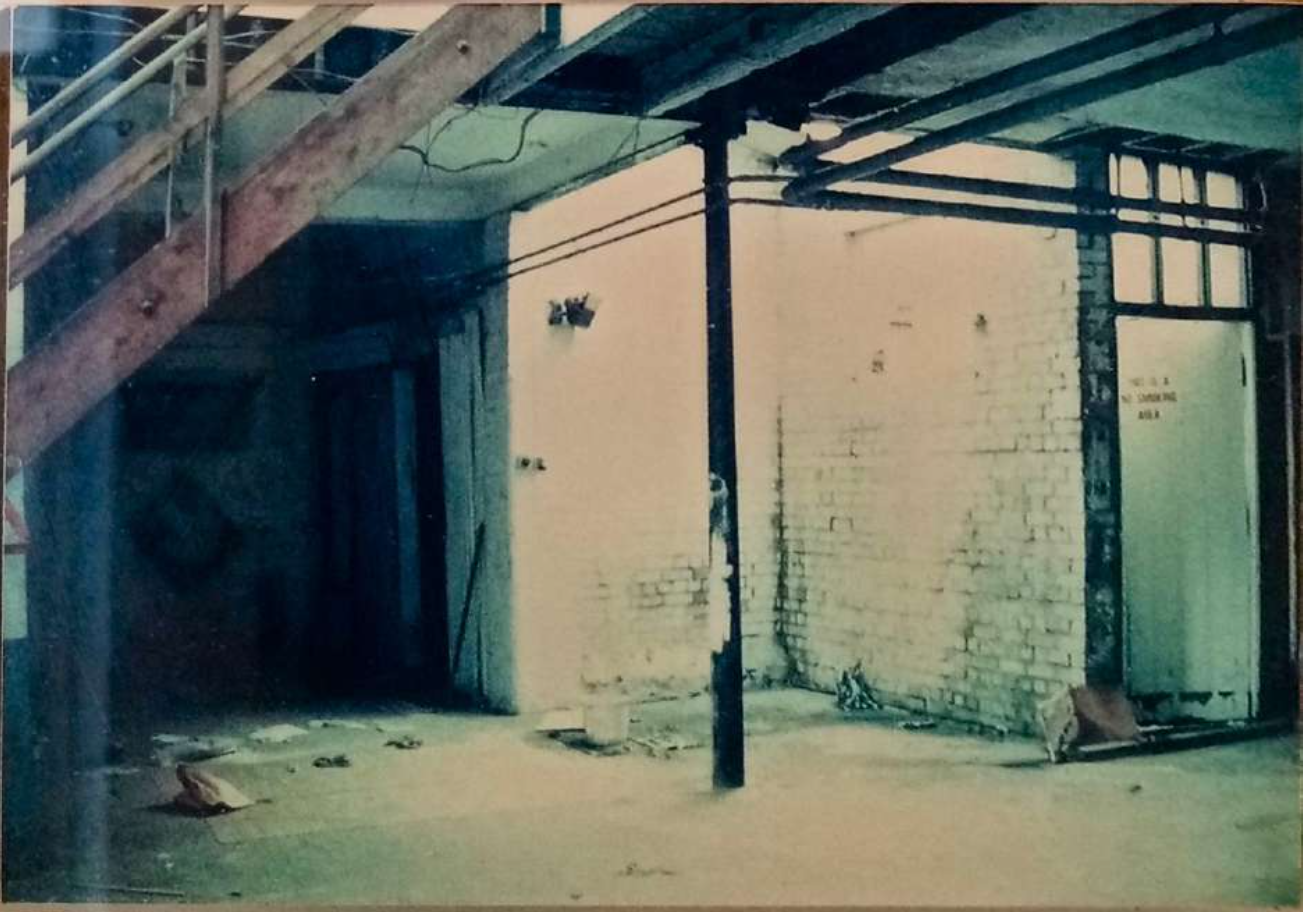
Ground floor of the Coach House c. 1980
2021 and Beyond: A Transformative Vision for BSWN
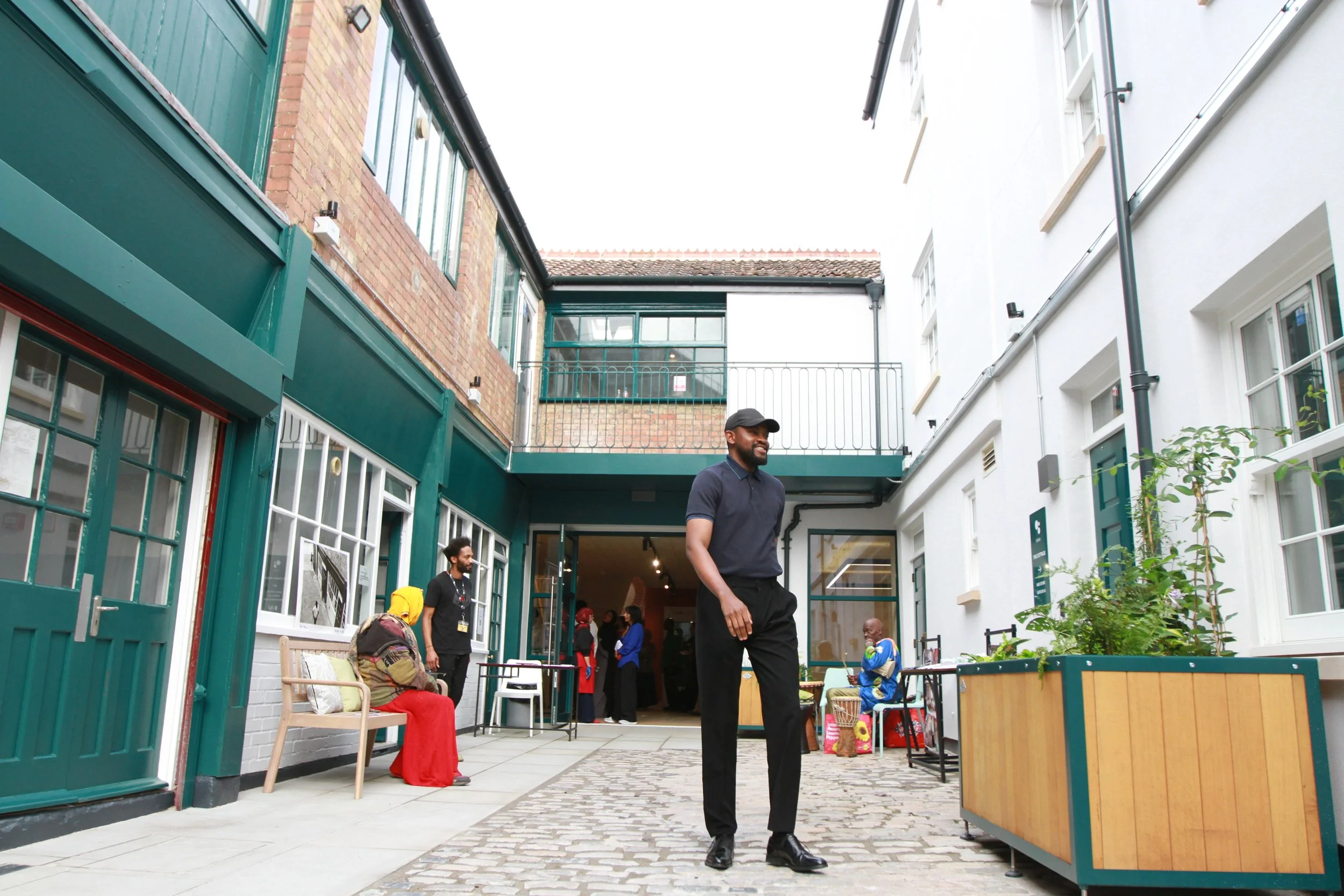
Recognising the site as both a historical community asset and indispensable platform for racial justice, the Black South West Network (BSWN) took over the lease of the Coach House in 2021. This laid the groundwork for a permanent home for the community, and in 2023, Bristol City Council officially awarded BSWN a 125-year lease through a Community Asset Transfer. This historic transfer secured the building’s long-term future, transforming the site into a permanent Centre for Black Enterprise and Culture.
BSWN’s core purpose is to elevate the Coach House into a dynamic hub for enterprise development, cultural expression, and community wealth building. The reimagined space functions as an innovation lab, business incubator, and cultural centre. Here, Black and racially minoritised communities can develop ideas, access tailored support, build professional networks, and shape cultural narratives entirely on their own terms. The newest refurbishment of the Coach House honours the building’s rich 200-year past while adapting it for more contemporary needs. This structural transformation has made the site fully accessible and environmentally sustainable, all while preserving its deep, historic connection to the surrounding area.
Meanwhile, the launch of the UnMuseum serves as a bold new chapter for the Coach House. Developed by BSWN, the UnMuseum represents a radical, decolonial reimaging
of mainstream museums. Rather than keeping histories caged behind glass, the UnMuseum dynamically gathers, preserves, and celebrates the personal stories, lived experiences, and oral histories of Black and racially minoritised communities across the South West. In doing so, the UnMuseum centres community ownership, memory, and cultural expression. It asks who gets to write and tell history, what forms knowledge can take, and how communities can preserve their own stories. In this sense, the UnMuseum is deeply intertwined with the history of the Coach House. As a historic site of work, care, enterprise, organising, and culture, the building itself serves as a tangible anchor for mainstream and community histories, overlooked stories, and generations of local knowledge.
As the reimagined Coach House opens, it carries forward a legacy that speaks directly to St Paul’s, to Bristol, and to communities across the South West whose histories deserve to be recognised in the places they helped shape. It also points to a future in which cultural heritage, enterprise, and racial justice are not separate ambitions, but intersecting pillars essential in building community wealth and collective power.
Of course, the history of the Coach House is still being uncovered. While visits to mainstream archives may reveal further information about leases, occupants, and phases of construction, community memory adds a critical texture and meaning that official records often fail to provide. What remains clear is that the Coach House has long been part of daily life in St. Paul’s, whether serving as a place of work, care, or creativity. Its transformation into a Centre for Enterprise and Culture, alongside becoming the home of the UnMuseum, honours that legacy by refusing to let the building’s history be forgotten.
Nearly two centuries after the space first took shape, the Coach House is once again being remade for the needs of its time. This time, its future is actively being moulded by the communities whose histories, enterprise, and cultural expression it exists to serve. In the process, the Couch House will protect community assets, honour Black histories, and create spaces where future generations feel like they truly belong.
Share Your Story
We cannot map this journey alone. History is happing right now, and community voices are the most vital pieces of the puzzle.
· Do you have a story, memory, or photograph of the Coach House?
· What are your hopes for its next chapter?